
The Ultimate Guide to Soap Dispensers: Types, Materials, and How to Choose in 2026
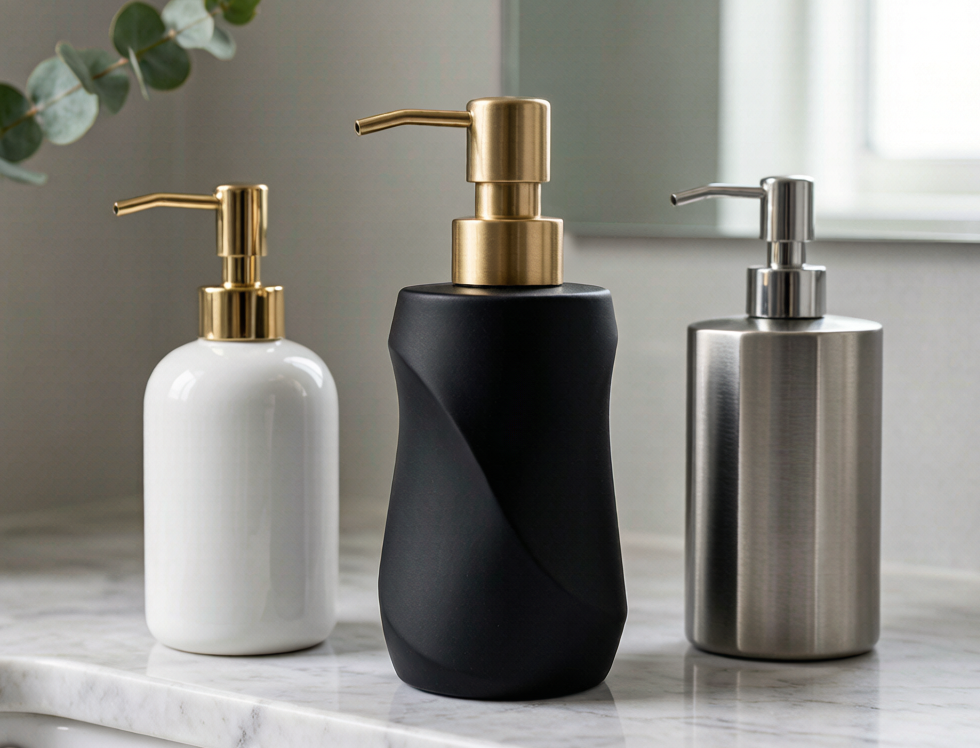
A soap dispenser is one of those everyday items you probably don’t think about — until it leaks, clogs, or ruins the look of your freshly renovated bathroom. Yet this humble fixture does more than hold soap. It affects your daily hygiene routine, your countertop aesthetics, and even how much soap you waste over time.
Whether you are a homeowner upgrading your bathroom, a retailer sourcing products for your store, or a hospitality buyer outfitting dozens of rooms, choosing the right soap dispenser is a decision worth getting right. In this guide, we go beyond the basic “manual vs. automatic” comparison. Drawing on 30 years of manufacturing experience in bathroom hardware, we cover everything from materials science to commercial procurement strategies — so you can make an informed choice and avoid the hidden pitfalls most buying guides ignore.
1. Soap Dispenser Types: What Actually Fits Your Space
Most articles will tell you there are two kinds of soap dispensers: manual and automatic. That is like saying there are two kinds of cars: gas and electric. Here is a more useful breakdown based on real-world application.
1.1 Countertop Pump Dispensers
These are the most common type found in homes. They sit directly on the sink counter or vanity and are operated by pressing a pump mechanism. You will find them in bathrooms, kitchens, and powder rooms across the world.
Best for: Everyday home use where style matters as much as function.
Capacity range: Typically 8 oz to 18 oz (240 ml to 530 ml).
Key advantage: Zero installation. Move them anywhere.
Watch out for: Poor pump quality. A cheap spring mechanism will fail after a few thousand presses — which happens faster than you think in a family bathroom.
1.2 Wall-Mounted Dispensers
Mounted directly onto the wall with screws or adhesive, these free up valuable counter space. They are the standard in commercial washrooms but are increasingly popular in modern minimalist homes and compact bathrooms.
Best for: Small bathrooms, commercial settings, or anyone who hates counter clutter.
Capacity range: 10 oz to 34 oz (300 ml to 1000 ml).
Key advantage: Permanent installation, larger capacity, harder to knock over.
Watch out for: Refill access. Some wall-mounted units require you to unscrew the entire housing — a messy job if you are not careful.
1.3 Automatic (Touchless) Dispensers
These use infrared sensors to detect your hand and dispense soap without physical contact. The technology has matured significantly. Early models were slow, misfired constantly, and drained batteries in weeks. Today’s best touchless dispensers have sub-0.3-second sensor response, IPX5 or higher waterproof ratings, and USB-C rechargeable batteries that last 2-3 months.
Best for: High-traffic areas, kitchens (greasy hands), households with young children or elderly.
Key advantage: Superior hygiene — zero cross-contamination.
Watch out for: Soap compatibility. Many automatic dispensers only work with thin liquid soap. Thick or foaming formulas will clog the mechanism.
1.4 Built-In / Deck-Mounted Dispensers
Installed directly into a hole in the countertop or sink, with the soap reservoir hidden underneath. This is the most seamless, high-end option.
Best for: Luxury renovations, hotel bathrooms, minimalist interiors.
Key advantage: Clean, invisible storage. No bottle on display.
Watch out for: Installation complexity and refill access under the sink.
1.5 Foaming Soap Dispensers
These use a special pump that mixes air with liquid soap to produce foam. Because the soap is pre-lathered, it uses far less product per wash — typically 70-80% less than a standard liquid pump.
Best for: Budget-conscious households, eco-friendly consumers, and families with kids (foam is harder to waste).
Key advantage: Massive soap savings over time.
Watch out for: You must use specially formulated foaming soap refills. Standard liquid soap will not work.
2. Materials: The Difference Between “Looks Good” and “Lasts”
This is where most buying guides fall short. They tell you materials exist, but not which ones will still look good after two years of daily use in a humid bathroom. Here is what the manufacturing side knows.
2.1 Resin (Polyresin)
Resin — also called polyresin or engineered stone resin — is one of the most underrated materials in bathroom accessories. It is composed of a polymer base mixed with mineral fillers, poured into molds, and hand-finished. The result is a material that can mimic the look and weight of natural stone, marble, or ceramic, but with significantly better durability and design flexibility.
Why resin matters:
- Design versatility: Resin can be cast into virtually any shape, texture, or color. Intricate carvings, marble veining effects, matte or glossy finishes — all achievable.
- Durability: Unlike ceramic or glass, resin does not shatter when dropped. It resists chipping far better than its natural counterparts.
- Weight and feel: Resin has the satisfying heft of stone without the fragility. It sits securely on a counter without sliding.
- Moisture resistance: Properly sealed resin is non-porous and will not absorb water, soap residue, or bacteria.
- Cost efficiency: Resin delivers the premium look of marble or stone at a fraction of the price — which is why it is widely used in hotel and hospitality supply chains.
Watch out for: Low-quality resin that uses excessive filler can feel lightweight and “plasticky.” A good resin dispenser should feel solid and substantial in your hand. Check for even coloring and smooth finishing — rough edges or visible seam lines indicate poor manufacturing quality.
2.2 Stainless Steel
The go-to material for modern kitchens. Brushed 304 stainless steel resists rust, fingerprints, and corrosion. It is easy to sanitize and matches most kitchen appliances. However, not all “stainless steel” is created equal. Cheap grades will rust in humid bathrooms. Look for 304 or 316 grade specifically.
2.3 Ceramic
Classic, elegant, and heavy. Ceramic soap dispensers bring a traditional, high-end feel to bathrooms. The glazed surface is non-porous and easy to wipe clean. The downside is obvious: drop it on a tile floor, and it is gone. Ceramic is best for low-traffic spaces like guest bathrooms, not busy family kitchens.
2.4 Glass
Glass dispensers look beautiful on a vanity. They allow you to see the soap level at a glance — a genuinely useful feature. But like ceramic, they are fragile. Look for thick, tempered glass rather than thin decorative glass. A rust-proof stainless steel pump on a glass bottle is a classic combination that works in almost any décor.
2.5 Plastic / ABS
Practical, affordable, and lightweight. High-quality BPA-free ABS plastic is actually very durable and ideal for high-traffic commercial bathrooms or households with young children. The downside is purely aesthetic — even the best plastic will not feel as premium as resin, ceramic, or metal. For a guest bathroom where style matters, skip plastic. For a utility room or kids’ bathroom, it is the smart choice.
3. How to Choose: A Decision Framework
Instead of a generic checklist, here is a decision path that reflects how real buyers think.
Step 1: Define the Traffic Level
Low traffic (guest bathroom, powder room): Style is priority. Ceramic, glass, or decorative resin. Manual pump is fine.
Medium traffic (family bathroom): Balance style and durability. Resin or stainless steel. Consider automatic for hygiene.
High traffic (kitchen, commercial washroom): Durability and capacity are everything. Wall-mounted, large-capacity stainless steel or commercial-grade ABS. Automatic is worth the investment here.
Step 2: Match the Material to the Environment
A kitchen dispenser lives near water, grease, and food splatter. Stainless steel or sealed resin are the smartest choices — both wipe clean instantly. A bathroom dispenser sits in humidity but faces fewer contaminants. Here, you can prioritize aesthetics with resin, ceramic, or glass.
Step 3: Pick the Pump Wisely
The pump is the number one failure point on any soap dispenser. When comparing products, pay attention to:
- Spring quality: A smooth, firm pump with a crisp return indicates a quality internal spring. Mushy or slow return = cheap spring that will fail.
- Nozzle design: Look for an anti-drip or angled nozzle. Straight nozzles tend to leave a drip of soap on the counter after each use.
- Material: Plastic pump heads are standard, but the internal mechanism should be metal or high-grade nylon for longevity.
Step 4: Do Not Ignore the Refill Experience
This is the hidden pain point that no one talks about in buying guides. A dispenser with a tiny refill opening will cause spills, waste soap, and make you dread refilling. Look for wide-mouth openings or removable tops. Some premium designs include a funnel or measuring guide built into the neck.
4. Commercial Buying: What Bulk Buyers Need to Know
If you are purchasing soap dispensers for a hotel, restaurant chain, office building, or retail inventory, the equation changes. Your priorities shift from “does it look nice on my counter” to “will 500 of these hold up for three years of daily abuse.”
4.1 Material Selection at Scale
For commercial procurement, resin and stainless steel dominate. Resin offers the best combination of durability, design flexibility, and cost control. You can order resin dispensers in custom colors and finishes to match a hotel brand’s exact palette. Stainless steel is the standard for kitchens and food-service environments where sanitation regulations apply.
4.2 Testing Standards
Reputable manufacturers test their pumps to 50,000+ cycles. Ask your supplier about cycle testing, drop testing (for resin and plastic units), and corrosion testing (for metal components). If they cannot provide this data, walk away.
4.3 Refill Logistics
For commercial operations, refill frequency matters. A 17 oz (500 ml) dispenser in a 200-room hotel will need refilling frequently. Consider bulk-refill systems or larger-capacity units (34 oz / 1000 ml) for high-traffic areas. Also, check whether the soap refill format is standardized — proprietary soap cartridges lock you into a single supplier and drive up long-term costs.
4.4 Warranty and After-Sales
Commercial-grade dispensers should come with at least a 2-year warranty. For bulk orders, negotiate replacement pump heads as part of the deal — the pump mechanism will fail before the housing does.
5. 2026 Design Trends: What Buyers Want Right Now
Consumer preferences have shifted noticeably in 2025-2026. Here is what is driving purchase decisions:
Matte finishes over chrome: Matte black, brushed nickel, and warm brass tones are outselling traditional chrome by a wide margin in residential markets. Resin dispensers with matte stone-effect finishes are particularly popular.
Texture matters: Smooth, minimalist designs are giving way to subtle texture — ribbed glass, hammered metal effects, and carved resin patterns. Texture adds perceived value and makes the product feel more substantial in the hand.
Sustainability signaling: Buyers increasingly look for refillable dispensers over disposable single-use bottles. Products marketed as “refillable,” “zero-waste,” or “made from recycled materials” command a premium — especially in the North American and European markets.
Cohesive bathroom sets: Consumers are buying matching sets — soap dispenser, toothbrush holder, tumbler, and soap dish in the same material and finish. If you sell dispensers, consider the cross-sell opportunity of a coordinated bathroom accessory set.
6. Maintenance: How to Keep Your Soap Dispenser Working for Years
A quality soap dispenser should last 5-10 years with basic care. Here is what actually works:
Monthly pump cleaning: Soap residue dries inside the pump mechanism and causes sticking. Once a month, run warm water through the pump by filling the bottle with water and pumping it through until the water runs clear.
Exterior cleaning: Wipe the exterior weekly with a damp microfiber cloth. For resin and ceramic units, avoid abrasive cleaners — they will dull the finish over time. A mild dish soap solution is sufficient.
Refill timing: Do not let the dispenser run completely dry. The pump mechanism relies on liquid for lubrication. Running it dry means the internal seals grind against each other, accelerating wear.
Soap compatibility: Stick to liquid hand soap labeled “mild” or “non-abrasive.” Antibacterial formulas with heavy chemicals can degrade internal seals faster. For automatic dispensers, always check the manufacturer’s viscosity guidelines — using soap that is too thick is the number one cause of premature pump failure in touchless units.
7. The Bottom Line: What Really Matters
After 30 years of manufacturing bathroom accessories and supplying markets across North America, here is what we have learned about soap dispensers:
The pump is more important than the bottle. A beautiful ceramic bottle with a cheap pump is a bad product. A simple design with a precision pump mechanism is a good product. Always prioritize pump quality.
Material tells the real story. Resin, stainless steel, ceramic, glass, plastic — the material determines how long the product lasts, how it ages, and how it feels in daily use. Choose based on where it will live, not just how it looks in a product photo.
Small details create big differences. An anti-drip nozzle. A wide refill opening. A non-slip base. A smooth pump return. These are the details that separate a dispenser you tolerate from one you genuinely enjoy using every day — and they are the details that separate manufacturers who care from those who do not.
Whether you need one soap dispenser for your home or a thousand for your business, the same principle applies: invest in the pump, match the material to the environment, and do not settle for a product that looks good in the box but falls apart on your counter.
Post time: Aug-11-2026


